Fake Capitalism: How American Healthcare Became a Feudal System
Politicians warn that socialism and communism are the greatest threats to America. Meanwhile, healthcare fails every basic test of a free market …
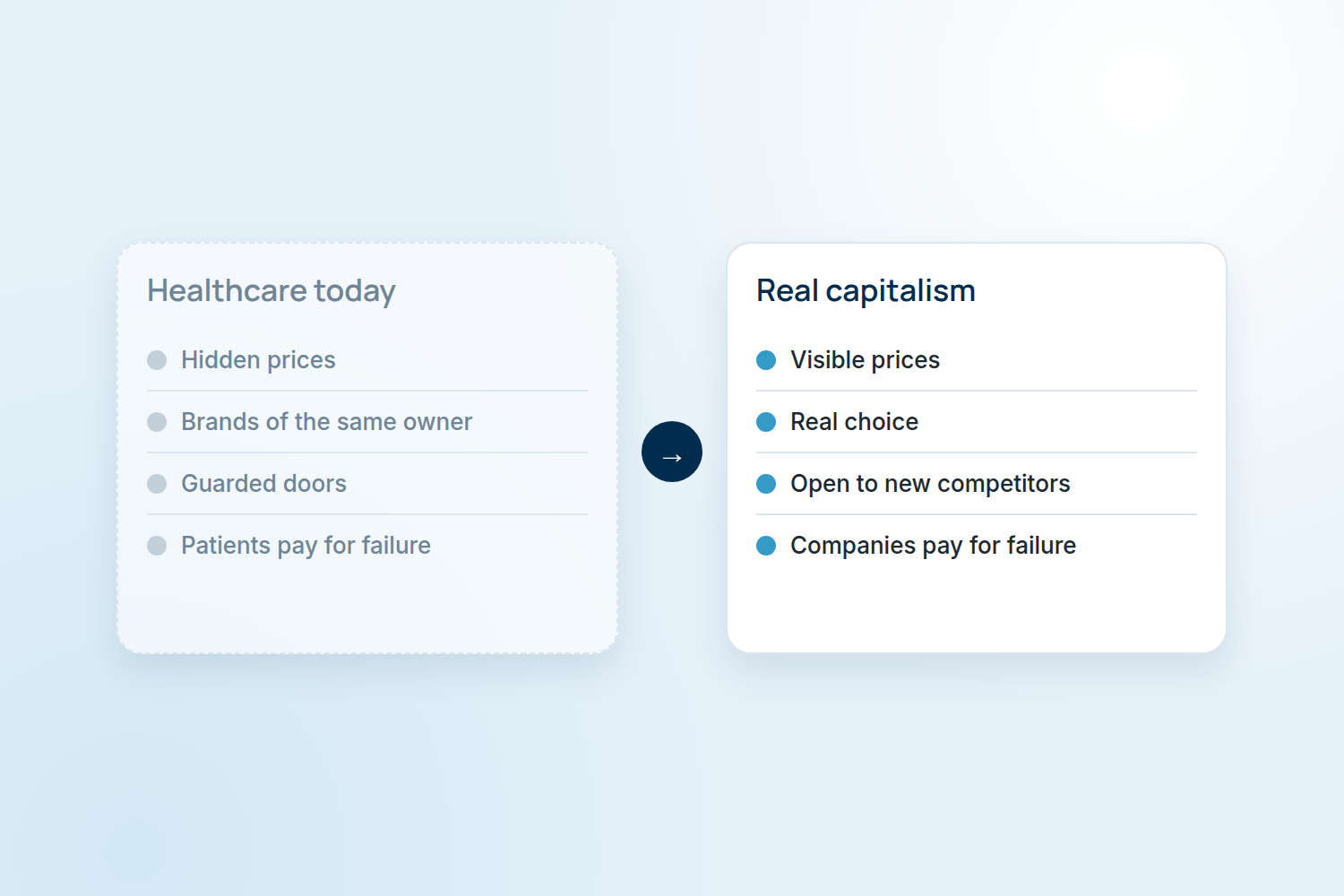
American politicians love to warn us about socialism and communism. Every election season, we hear that they are the greatest threats to our freedom and our prosperity.
But look at the industry that takes the largest share of the economy, touches every family and decides who gets care. Healthcare is not a socialist system, and it is not a free market either. It is something older: a system of lords and serfs, dressed in the language of capitalism.
I believe in capitalism. I came to the United States from Brazil because I believed in it. That is exactly why I refuse to call what is happening in American healthcare by that name.
Four tests of a real market
Capitalism works when a few basic conditions are true. Prices are visible. Buyers can choose. New competitors can enter. And companies that fail their customers lose business. Healthcare fails all four.
1. Can you see the price?
In a real market, you know what something costs before you buy it. In healthcare, you usually find out weeks or months later.
Federal rules have required hospitals to publish their prices since 2021. Yet when the advocacy group PatientRightsAdvocate.org reviewed 2,000 hospitals, it found only about a third fully complied. Government reviews using other methods report higher numbers, but the point stands: years after the rule, patients still cannot reliably compare prices before they receive care.
A market without visible prices is not a market. It is a toll booth.
2. Can you choose?
Choice requires competition. According to the American Medical Association, 97% of metropolitan commercial health insurance markets in the United States were highly concentrated in 2024. In nearly half of those markets, a single insurer held at least half of the business.
Prescriptions follow the same pattern. The Federal Trade Commission reported in 2024 that the three largest pharmacy benefit managers, CVS Caremark, Express Scripts and OptumRx, handled nearly 80% of the prescriptions filled in the United States.
Most Americans also do not choose their insurance at all. Their employer chooses for them, and changing jobs means changing doctors.
3. Can a new competitor get in?
In a real market, a better product can enter and win. In healthcare, the doors are guarded.
When AbbVie’s Humira faced competition, the company built what critics call a “patent thicket”: well over a hundred patents in the United States, far more than in Europe. Lower-cost biosimilar versions were sold in Europe from 2018. In the United States, settlements kept them off the market until 2023. Courts ruled that this was legal, which is precisely the problem: the rules themselves protect the incumbent.
We lived a version of this ourselves. We built a certified health platform and then waited months at the last gate, identity proofing for controlled-substance prescriptions, controlled by a handful of companies and one dominant prescription network. I told that story in “Locked Out at the Last Step.”
4. Do companies pay for failure?
In a real market, a company that overcharges or underdelivers loses customers. In healthcare, the patient often has nowhere else to go, so the bill gets paid and the cost moves to the patient.
The Consumer Financial Protection Bureau found in 2024 that 15 million Americans still had medical bills on their credit reports, totaling more than $49 billion in collections. The people paying for failure are the patients, not the companies.
The new feudalism
If healthcare is not a free market, what is it? The closest comparison is feudalism.
In a feudal system, a few lords controlled the land. Everyone else worked it, owed them rent and could not easily leave. Today:
- The land is access to care. A few large companies control insurance, pharmacy benefits, prescription networks and, increasingly, the doctors themselves.
- The lords are vertically integrated conglomerates that own the insurer, the pharmacy benefit manager, the clinics and the data, and profit at every step.
- The doctors are becoming tenants. In 2012, about a quarter of U.S. physicians were employed by hospitals or corporate entities. By January 2024, according to the Physicians Advocacy Institute and Avalere, it was 77.6%. Many work under non-compete agreements that make leaving difficult.
- The patients are bound to the estate. Their coverage is tied to their job, their records are locked in systems they do not control, and their debts follow them.
Feudalism did not survive because people loved their lords. It survived because ordinary people could not see how the system worked, could not leave it and could not afford to fight it.
Complexity as control
That is the most dangerous part of modern healthcare: it is designed to be impossible to understand.
Codes, networks, prior authorizations, explanations of benefits, out-of-network rules, rebates, deductibles. The complexity does not serve patients. It exhausts them. People who are sick, scared and buried in paperwork do not have the time or energy to question whether they were charged fairly, or whether the system itself is fair.
When people are kept too overwhelmed and too uninformed to question a system, they stop being customers. They become subjects.
Who writes the rules
Healthcare is also one of the most powerful forces in Washington. According to OpenSecrets data, the health sector has been the top spender on federal lobbying since 1999, and pharmaceuticals was the single biggest lobbying industry in 2024, a year when total federal lobbying reached a record $4.4 billion.
So while politicians on both sides warn us about socialism, the industries they regulate help write the rules that keep competition out. That is not socialism, and it is not capitalism. It is capture.
What real capitalism in healthcare would look like
Real capitalism in healthcare is not a slogan. It is a set of conditions anyone can check:
- Visible prices before care, and itemized receipts after it
- Real choice of insurer, pharmacy and doctor, not just a choice of logos owned by the same parent
- Open doors for new competitors, in identity, prescribing networks and certification
- Portable records and identities, so patients and doctors can leave a system that fails them
- Accountability that falls on the companies that fail, not on the patients who pay
That is what AENTE is built for: transparency that cannot be turned off, records that follow the patient and tools that let independent doctors compete. Not because we oppose capitalism, but because we want to see it work.
The question for America is not whether it will choose capitalism or socialism. It is whether it will tolerate a feudal system that calls itself capitalism.
Related reading: “Broken By Design, Part 3: Capitalism 2.0” and “Capitalism 2.0”.
Sources
- PatientRightsAdvocate.org, hospital price transparency compliance report; Healthcare Dive on later findings and differing government measures
- American Medical Association, Competition in Health Insurance, 2025 edition; Becker’s Payer Issues
- Federal Trade Commission interim staff report on pharmacy benefit managers, July 2024, summarized by Arnold & Porter and CBS News
- I-MAK, Humira patent report; Bristows on the Seventh Circuit decision
- Consumer Financial Protection Bureau findings on medical debt, reported by Becker’s Hospital Review
- Physicians Advocacy Institute and Avalere, physician employment trends, reported by Fierce Healthcare
- OpenSecrets lobbying data, reported by the Washington Examiner
Want to see what transparent healthcare looks like? Create your AENTE account or talk to our team.
Back to blogKeep reading
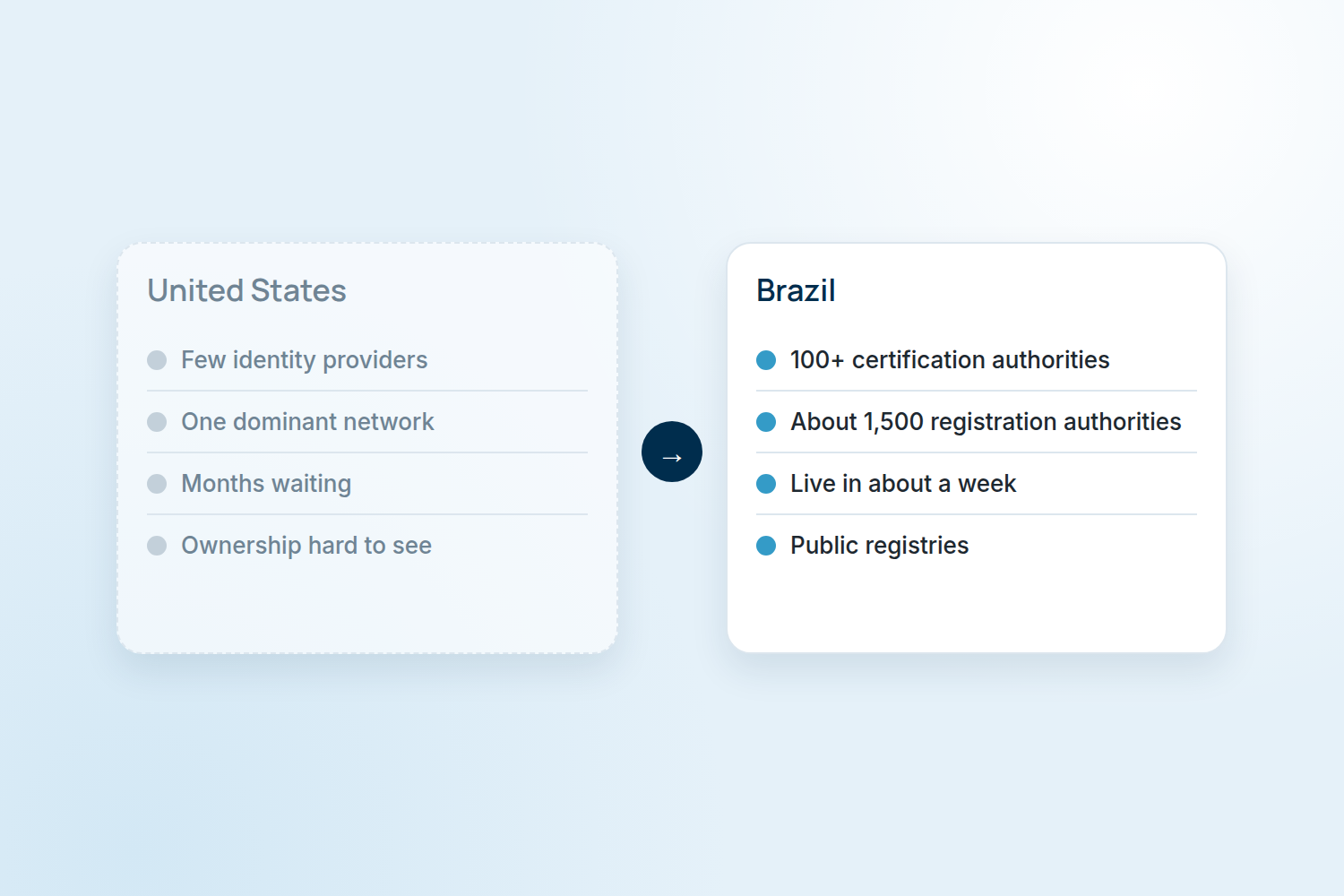
Locked Out at the Last Step: Identity Proofing, E-Prescribing and Why We Went Live in Brazil First
We built a certified health platform for the U.S. market, then waited months at the last barrier: identity proofing for controlled-substance prescript …
Read article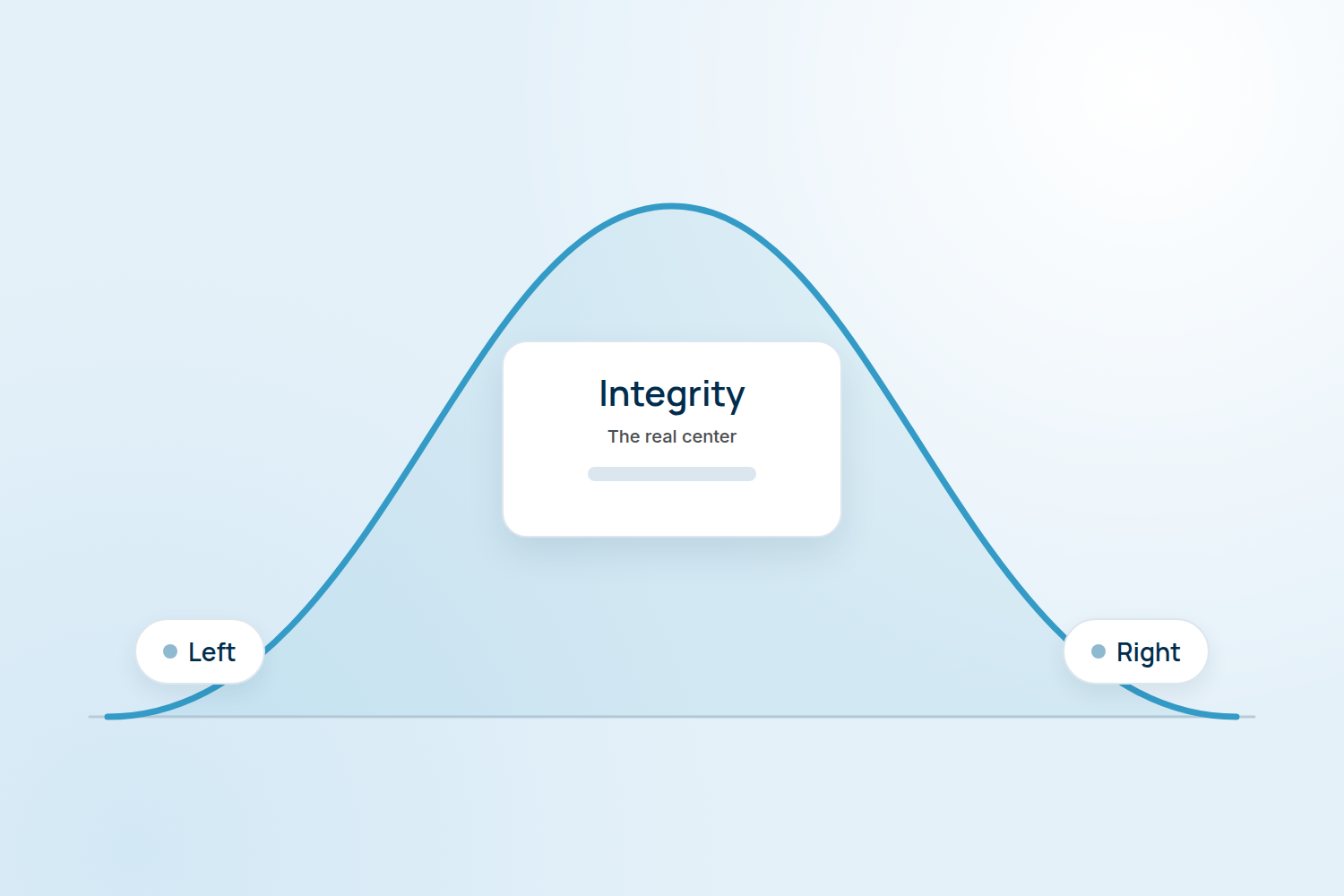
The Bell Curve of Politics
How corruption and polarization are eroding the American ideal, and why healthcare is the place to start fixing it.
Read article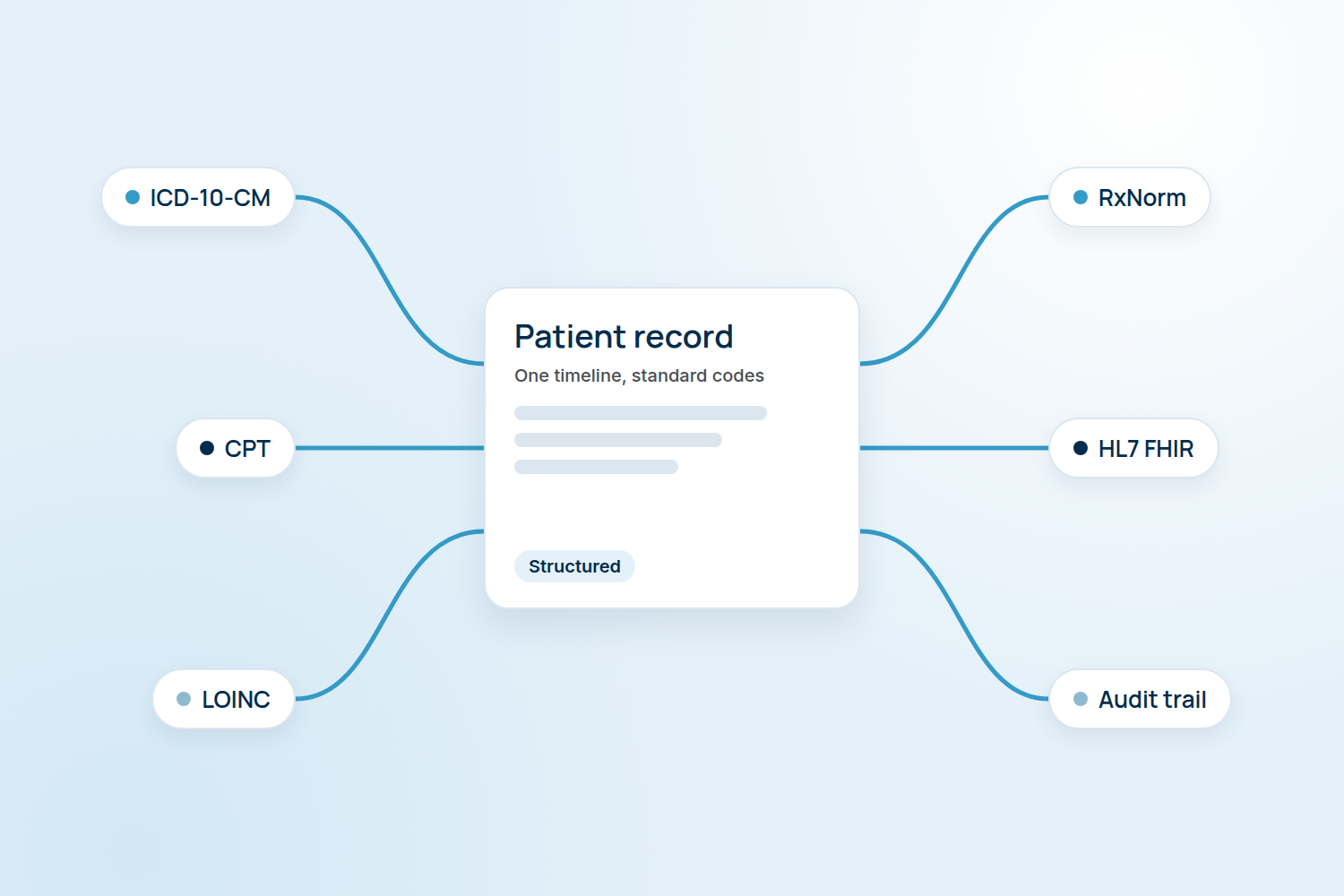
Taming the EMR Monster
How AENTE rebuilt the medical record as one platform, with standard code sets, structured documentation and an audit trail for every action.
Read articleGet new articles by email
Stay updated with our news and latest updates.
Your subscription is confirmed. New AENTE articles will come straight to your inbox.
We also sent a confirmation to your email. If you do not see it, please check your spam folder.
Discover the platform.
Connect your whole network.

Create one account for your organization, whether it is a single clinic, a hospital group or a health department. Add your units from CNES, invite your professionals and set your own rules. Your account connects to the rest of the network. Doctors keep one profile across every organization, patients keep one record, and services, referrals and reports move between accounts with logged access. Use the button below to open the AENTE portal, create your organization's account and start managing every unit in one place. Clinics on a 4-year contract will have first option to buy in at the end of the term, with no guarantee.
Discover the platform